HI homepage

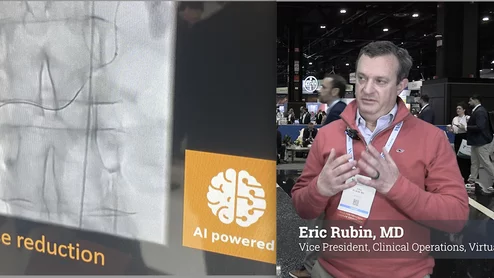
Eric Rubin, MD, vice president of clinical operations at Virtua Health, and the American College of Radiology's CPT advisor to the American Medical Association (AMA), explains the process for creating a Category I CPT code for payments and the difference with Category III temporary tracking codes.
Radiology dominates FDA-cleared AI, but reimbursement lags far behind

As of January 2026, there will only be two CPT category 1 payment codes for newer AI, despite there being hundreds of FDA-cleared medical imaging algorithms.

Medicare Advantage
Radiology groups renew push for bill to reform prior authorization

Over 125 medical societies including several in radiology wrote to leaders in the House and Senate on Dec. 9, asking them to pass the Improving Seniors’ Timely Access to Care Act. 

Shared meals help department boost radiologist well-being

Weill Cornell Medicine recently explored the impact of meal-time outings in fostering physician job satisfaction, empathy and sense of connection. 

Solis Mammography
Solis Mammography acquires 40-year-old breast imaging center alongside 3 more facility openings
The private equity-backed, Addison, Texas-based provider group recently reached a deal to buy the Knoxville Comprehensive Breast Center in Tennessee. 

Dynamic chest radiography could be an alternative to pulmonary function tests for diagnosing COPD
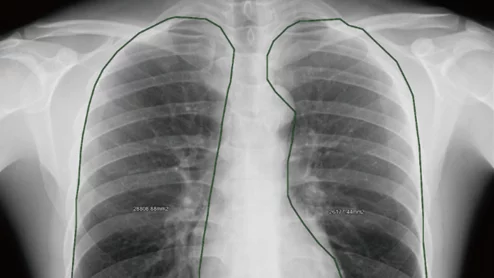
Dynamic chest radiography could potentially replace pulmonary function tests

The X-ray technique uses continuous radiographic acquisition during respiration to assess lung function.

doctor wrong patient wrong-site surgery medical error malpractice mistake
Majority of residents' after-hours CT report discrepancies not clinically significant

A new analysis published in Emergency Radiology examines how likely it is for these discrepancies to lead to changes in diagnosis and patient care. 

Around the web

RadNet Chaiman and CEO Howard Berger, MD, explains why the company has invested tens of millions into DeepHealth to rapidly build up a new business model. 


Thanks to AI, clinicians can use mammograms to do a lot more than identify signs of breast cancer. Researchers explored data from nearly 50,000 patients, presenting their findings in Heart.

A new analysis is prompting questions regarding how rigorously many of the AI-enabled tools approved by the U.S. Food and Drug Administration are evaluated prior to their clearance.