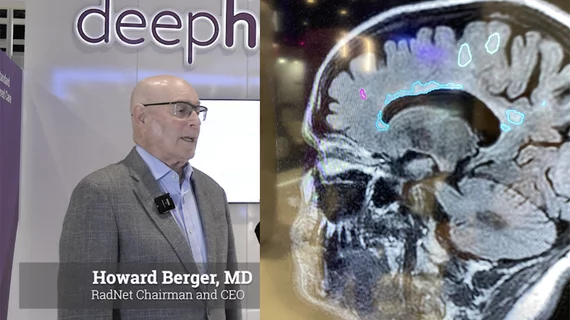
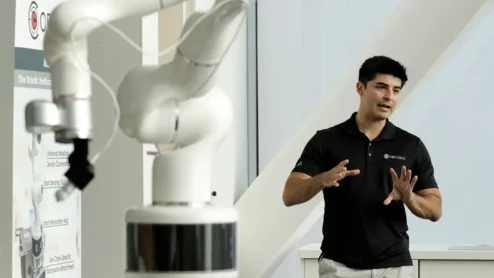
RadNet Chaiman and CEO Howard Berger, MD, explains why the company has invested tens of millions into DeepHealth to rapidly build up a new business model.
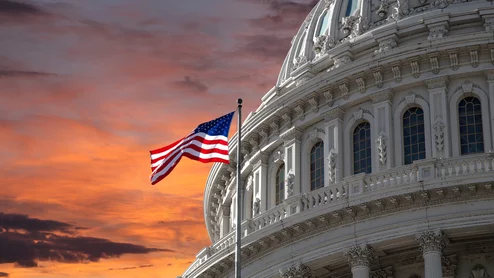
With eight Democrats agreeing to the Republican-backed deal that reverses the firings of federal workers, the Senate now has the 60 votes needed for the bill to advance. The rehirings will include the 1,200 workers fired at the Department of Health and Human Services.
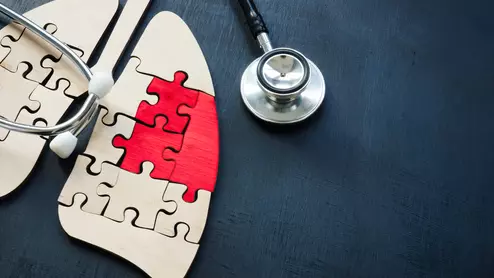
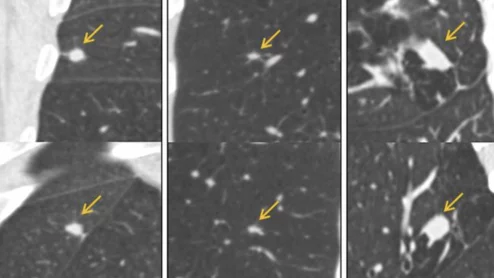
For many patients with interstitial lung disease, cancer could go undetected for years, putting them at risk of disease progression that would require more extensive treatment.
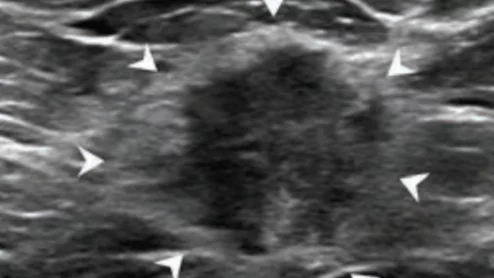
Though this finding is relatively uncommon, it is expected that the BI-RADS 6th edition ultrasound lexicon will include it as a feature associated with malignancy.
Large language models have shown great potential in medical imaging, but their success has been hindered by their wavering effectiveness. Now, nearly three years after ChatGPT's release, experts are sharing new insights.
Reducing false positives could decrease the frequency of unnecessary procedures, lower the associated costs and also ease patient anxiety concerning CT results.
RadNet Chaiman and CEO Howard Berger, MD, explains why the company has invested tens of millions into DeepHealth to rapidly build up a new business model.
Thanks to AI, clinicians can use mammograms to do a lot more than identify signs of breast cancer. Researchers explored data from nearly 50,000 patients, presenting their findings in Heart.
A new analysis is prompting questions regarding how rigorously many of the AI-enabled tools approved by the U.S. Food and Drug Administration are evaluated prior to their clearance.