Radiologists, meanwhile, took to social media to criticize the endeavor, noting that the generative AI company lacks clinical evidence to back its marketing claims.
The proportion of radiologists performing some (>0%) IR-related work declined from 70% in 2008 down to 50% by 2023, according to new research published in JVIR.
Since breast cancer screening exams are routinely completed annually or bi-annually, experts believe the tool could help spot signs of developing cardiovascular disease prior to it progressing.
"It is almost a tidal wave of change from the federal level that is going to begin impacting state legislatures across the country. I think folks should probably be aware of that,” said RBMA's Kit Crancer.
Ben White, MD, believes Dario Amodei may have “set a new record on how quickly you can be wrong about how radiology works and how it’s been affected by AI so far.”
The country’s largest imaging group announced the news March 5, with the decision applying to its Cognita Chest X-ray tool across multiple clinical indications.
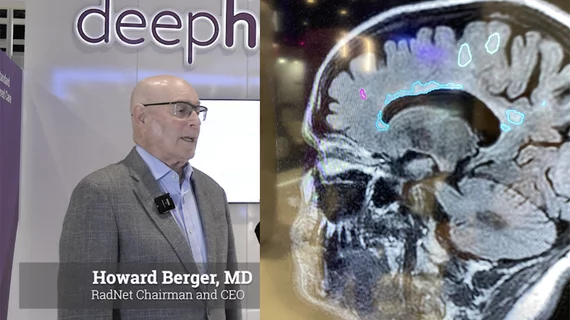
RadNet Chaiman and CEO Howard Berger, MD, explains why the company has invested tens of millions into DeepHealth to rapidly build up a new business model.
Thanks to AI, clinicians can use mammograms to do a lot more than identify signs of breast cancer. Researchers explored data from nearly 50,000 patients, presenting their findings in Heart.
A new analysis is prompting questions regarding how rigorously many of the AI-enabled tools approved by the U.S. Food and Drug Administration are evaluated prior to their clearance.