HI homepage

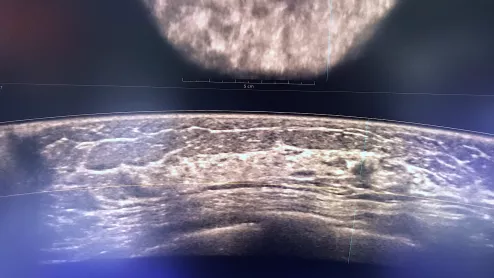
Automated breast ultrasound (ABUS) allows for reproducible breast imaging without variation based on which sonographer performs the exam. It also can help centers were they are short on qualified breast sonographers.  Breast ultrasound can help identify cancers, or benign cysts, even in women with very dense breast tissue. At the GE Healthcare booth at RSNA.

Could automated breast ultrasound replace handheld ultrasound?

In a study that included hundreds of radiologist recommendations for additional imaging, there was a threefold increase in follow-up adherence when radiologists utilized a voluntary closed-loop communication tool that required structured recommendations. 

Thumbnail

Radiology AI vendor Bot Image may market its prostate software not only for diagnosing cancer when suspected but also for performing prostate screenings.

Microsoft Johns Hopkins AI partnership

Big Tech players have been investing in partnerships with large healthcare providers on AI endeavors for several years now. According to both sides in one such collaboration, the resulting synergy offers “immense potential” to improve patient access, care and outcomes.

Thumbnail

Although the term “radiology summer school” makes it seem like the program might interfere with a student’s eagerly anticipated summer break, the program in question lasts just three days.

Thumbnail

Accurate information relative to personal risk is crucial for improving uptake of low-dose CT (LDCT) lung cancer screening, but new data indicate that many websites' content on the topic is out of date. 

Innovation at work

As radiology departments across the US continue to navigate the complexities of the current imaging market, including disruptions in supply chains and increased demand for CT contrast media, one constant remains: the need for reliable, quality supply partners to help sustain patient care. 

Sponsored by Bayer

Around the web

Thanks to AI, clinicians can use mammograms to do a lot more than identify signs of breast cancer. Researchers explored data from nearly 50,000 patients, presenting their findings in Heart.