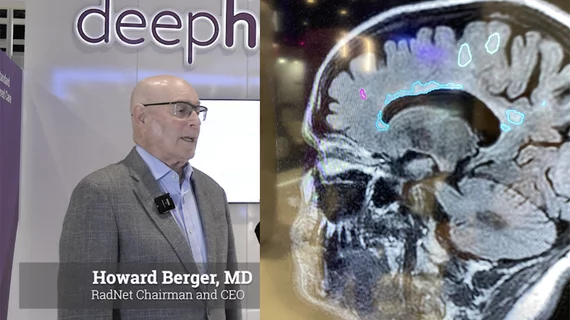
RadNet Chaiman and CEO Howard Berger, MD, explains why the company has invested tens of millions into DeepHealth to rapidly build up a new business model.
With eight Democrats agreeing to the Republican-backed deal that reverses the firings of federal workers, the Senate now has the 60 votes needed for the bill to advance. The rehirings will include the 1,200 workers fired at the Department of Health and Human Services.
For many patients with interstitial lung disease, cancer could go undetected for years, putting them at risk of disease progression that would require more extensive treatment.
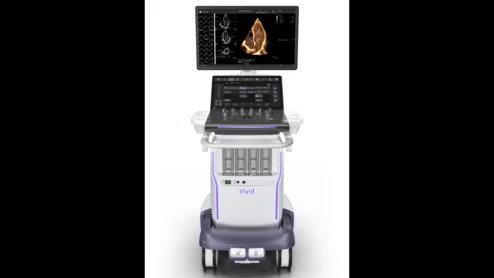
The company describes Vivid Pioneer as its “most advanced, ultra-premium and adaptive cardiovascular ultrasound system yet.” It includes new and improved AI capabilities and a compact design that is still fully functional in tight workspaces.
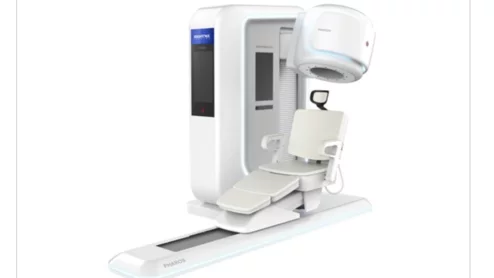
The system was built with patients in mind, and its compact design has the potential to expand access to the modality where it may have previously been lacking.
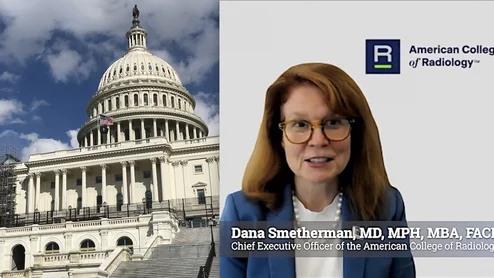
Dana Smetherman, MD, MPH, MBA, chief executive officer of the American College of Radiology, discusses key advocacy efforts amid a sea of policy change.
This year marks the 37th annual gathering of the popular Transcatheter Cardiovascular Therapeutics conference. What started as a small gathering in 1988 has grown into one of interventional cardiology’s biggest events.
RadNet Chaiman and CEO Howard Berger, MD, explains why the company has invested tens of millions into DeepHealth to rapidly build up a new business model.
Thanks to AI, clinicians can use mammograms to do a lot more than identify signs of breast cancer. Researchers explored data from nearly 50,000 patients, presenting their findings in Heart.
A new analysis is prompting questions regarding how rigorously many of the AI-enabled tools approved by the U.S. Food and Drug Administration are evaluated prior to their clearance.