HI homepage

Thumbnail
New data highlight 'systemic inconsistencies' in documentation of contrast reactions
Although uncommon and typically not life-threatening, hypersensitivity reactions have increased in recent decades alongside the significant rise in CT use. 

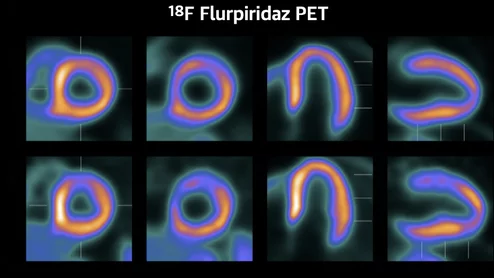
The new cardiac PET radiotracer flurpiridaz F-18 is posed to be a major game changer and will likely lead to increased adoption of cardiac PET.
Largest network of private cardiology groups in US to deploy GE HealthCare's cardiac PET tracer
One of the tracer’s more significant advantages is its extended half-life of 109 minutes—significantly longer than other currently available PET MPI imaging agents.

Anthem Elebance blue cross blue shield bcbs
ACR blasts ‘deeply flawed’ Anthem policy targeting out-of-network radiologists

Last month, the insurance giant announced it will begin charging hospitals a 10% administrative penalty for claims that involve docs outside of its networks. 

mergers and acquisitions M&A consolidation puzzle business deal
Radiology Partners acquires healthcare AI company for $80M
The country’s largest imaging group is buying Palo Alto, California-based Cognita Imaging Inc., which was founded by scientists at Stanford University. 

nasdaq stock market trading wall street
Radiology provider Lumexa Imaging seeks to raise $200M through IPO

If the effort succeeds, the Raleigh, North Carolina-based imaging group would soon begin trading on the Nasdaq under the ticker symbol LMRI. 

Thumbnail
RadNet touts results from largest real-world analysis of AI-powered breast cancer screening in US history

Published in Nature Health, the study included mammograms from over 579,000 women treated across 109 imaging sites in four states. 

Around the web

RadNet Chaiman and CEO Howard Berger, MD, explains why the company has invested tens of millions into DeepHealth to rapidly build up a new business model. 


Thanks to AI, clinicians can use mammograms to do a lot more than identify signs of breast cancer. Researchers explored data from nearly 50,000 patients, presenting their findings in Heart.

A new analysis is prompting questions regarding how rigorously many of the AI-enabled tools approved by the U.S. Food and Drug Administration are evaluated prior to their clearance.