HI homepage

partnership business deal joint venture

The collaboration with Nvidia—a leader in AI solutions—was unveiled Monday during the International Society for Magnetic Resonance in Medicine's annual meeting. 

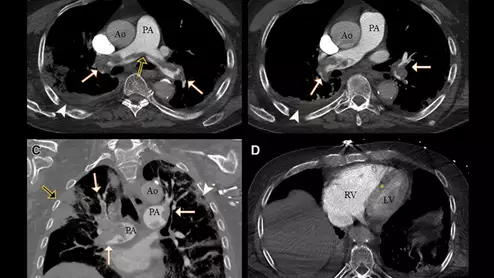
COVID causes increase risk of clotting. Example of a pulmonary embolism. CT pulmonary angiograms in a 77-year-old man with COVID-19 and a saddle embolus to pulmonary arteries (black arrow in A) extending into right and left pulmonary arteries (white arrows) in (A, B) axial and (C) coronal planes. Arrowheads show pulmonary changes associated with COVID-19 and possible lung infarction (black arrow in C). (D) Axial image at the level of the ventricles shows right-sided heart strain. RSNA. COVID PE

The diagnostic yield of the exam, however, has remained largely unchanged, prompting experts to question whether CT pulmonary angiography is being overused in the ED.

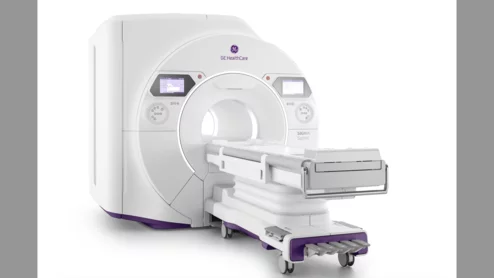
GE HealthCare SIGNA Sprint MRI

The new 1.5T MRI scanner includes a wide bore and key AI features designed to boost the patient experience.

The two groups stressed that tariffs would likely impact patient care.

A circulating letter signed by IR techs and nurses details concerns about how a dire shortage of qualified staff is impacting care at a regional hospital. 

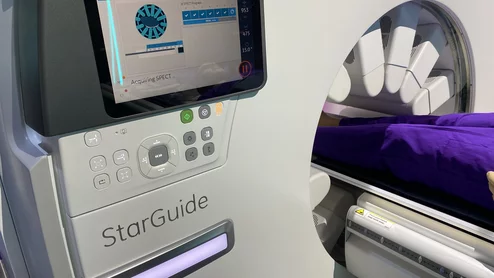
The GE Starguide SPECT-CT system uses arms containing the SPECT detectors that extent to the patient to enable clearer imaging. Photo by Dave Fornell. #RSNA #RSNA23 #RSNA2023

"Domestic radiopharmaceutical suppliers, who receive isotopes from abroad, would be impacted by price changes and uncertainty caused by additional tariffs,” SNMMI President Cathy Cutler, PhD, wrote in a letter to the U.S. Department of Commerce this week.
Around the web

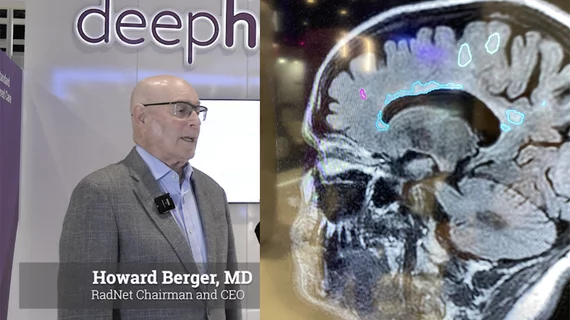
RadNet Chaiman and CEO Howard Berger, MD, explains why the company has invested tens of millions into DeepHealth to rapidly build up a new business model. 


Thanks to AI, clinicians can use mammograms to do a lot more than identify signs of breast cancer. Researchers explored data from nearly 50,000 patients, presenting their findings in Heart.

A new analysis is prompting questions regarding how rigorously many of the AI-enabled tools approved by the U.S. Food and Drug Administration are evaluated prior to their clearance.