Radiologists, meanwhile, took to social media to criticize the endeavor, noting that the generative AI company lacks clinical evidence to back its marketing claims.
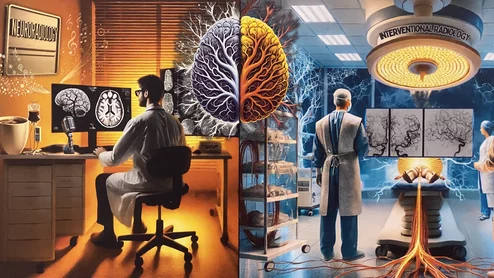
The proportion of radiologists performing some (>0%) IR-related work declined from 70% in 2008 down to 50% by 2023, according to new research published in JVIR.
Unlike most AI tools that were built for specific applications like identifying stroke, the foundation model can be used for a wide array of tasks, as it can learn from other AI frameworks.
Despite diagnostic imaging leading with over 1,000 FDA-cleared AI tools, the Bureau of Labor Statistics expects radiology to see 5% job growth through 2034.
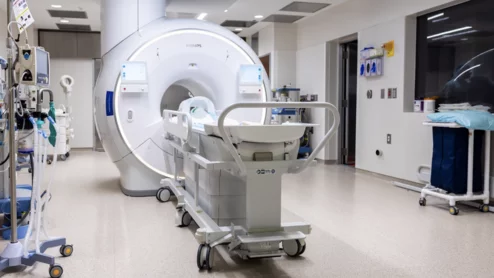
NQF, a nonprofit organization working to improve healthcare outcomes, has singled out “patient harm associated with an MRI-related thermal injury” as an important area of concern.
The duo plan to establish a global center of excellence in theranostics, taking advantage of Siemens’ state-of-the-art technology and software to advance the use of radiopharmaceuticals in cancer care.
RadNet Chaiman and CEO Howard Berger, MD, explains why the company has invested tens of millions into DeepHealth to rapidly build up a new business model.
Thanks to AI, clinicians can use mammograms to do a lot more than identify signs of breast cancer. Researchers explored data from nearly 50,000 patients, presenting their findings in Heart.
A new analysis is prompting questions regarding how rigorously many of the AI-enabled tools approved by the U.S. Food and Drug Administration are evaluated prior to their clearance.