A team of international scientists developed a new non-invasive MRI-based early warning system that may alert physicians about approaching heart attacks in patients and identify those at high risk.
Optical coherence tomography (OCT) offers superior detection of coronary vascular changes compared to angiography in pediatric heart transplant recipients. The technique can be used to improve the medical management in this population.
With the help of functional MRI (fMRI) technology, researchers have been able to identify certain areas of the brain associated with poor sleep quality and depression, according to a study published July 25 in JAMA Psychiatry.
Interventional radiologists (IR) are becoming increasingly integral to providing effective and cost-friendly care. But in rural areas, where resources are already scarce, recruiting these specialists has become an uphill battle.
Canadian researchers may have found a non-invasive method to safely poke holes in the blood-brain barrier to allow delivery of drugs for neurological conditions such as Alzheimer's disease.
GE Healthcare Korea announced today it has installed its cyclotron with a complete PET radiopharmacy suite at the Korea Institute of Radiological & Medical Sciences (KIRAMS), making the nuclear medicine institute the world’s 400th cyclotron production facility under the GE brand.
The National Electrical Manufacturers Association (NEMA) urged the Trump administration to avoid implementation of additional 25 percent tariffs on products imported from China, including medical imaging equipment.
The Alzheimer’s Association offered a sneak peek of its first clinical practice guidelines for primary care physicians in diagnosing Alzheimer’s disease and other dementias during its July 22 annual meeting in Chicago.
Courtesy of the University of Southern California.
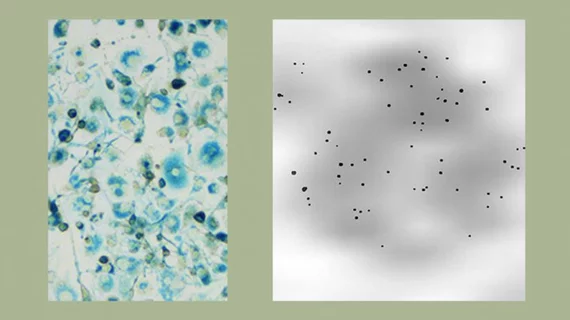
Researchers from the Keck School of Medicine at the University of Southern California (USC) successfully used high-resolution MRI and a cell-labeling technique to visualize nearly 100 cells, which may allow clinicians to assess the effectiveness of immune cell- and stem cell-based therapies to treat cancer.
In the Blue Mountains region of southeastern Australia a lack of MRI services are hampering patient care, the Blue Mountain Gazette reported—and local politicians are calling for action.