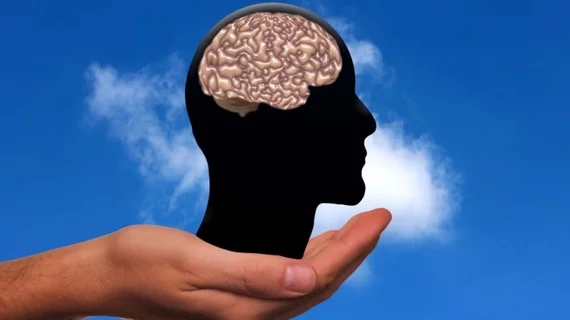
A recent editorial in STAT argued that as artificial intelligence (AI) continues to proliferate, the need for human providers will not decrease—rather, their knowledge will become more valuable in decision-making.
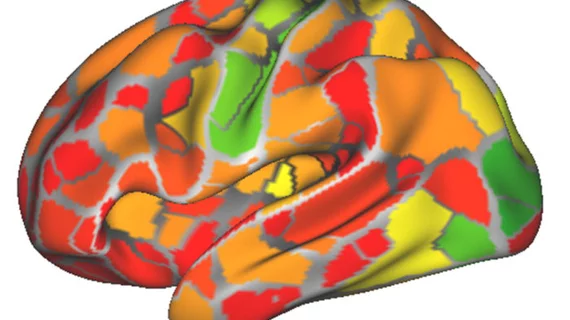
Courtesy of the Washington University School of Medicine in St. Louis.
Neurological and psychiatric disorders may be diagnosed through functional connectivity MRI (fcMRI) by detecting differences in neural networks, according to a release from Washington University School of Medicine in St. Louis.
Twitter has become the most widely used social media network by those in the medical community. But imaging providers may not be properly using the platform, according to a study published in the Journal of the American College of Radiology.
Molly Fausone uses the new mobile imaging device to work with a patient. Courtesy of the University of Michigan.
Molly Fausone is a third-year medical student at the University of Michigan—she's also paralyzed from the chest down. Despite her physical limits, a new device allows her to perform full-body patient exams with limited physical contact, according to a University of Michigan press release.
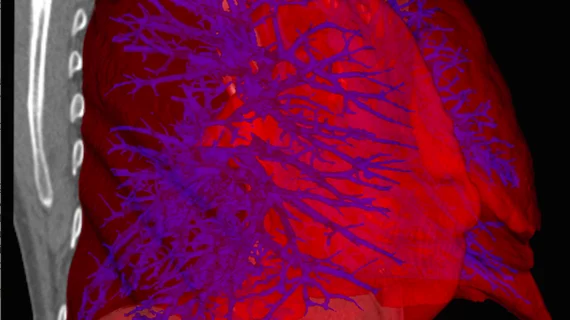
AI organ segmentation of lungs and vasculature. Photo courtesy of Aether.
Harvard Medical School researchers in collaboration with 3D bioprinting firm Aether recently introduced a 3D printing software that uses artificial intelligence (AI) to reproduce medical images of organs as 3D models.
The FDA released, "Medical Device Safety Action Plan: Protecting Patients, Promoting Public Health," on April 17 in an effort to enhance programs and processes to assure the safety of medical devices.
The FDA approved the first use of Trace-Ability’s Tracer-QC at Massachusetts General Hospital for testing of an imaging agent used in positron emission tomography (PET)-N-13 ammonia for injection.
Artificial intelligence (AI) continues to change the way radiologists work. The major shift predicted by many isn’t happening as quickly as expected—but AI is reaching areas some didn’t anticipate.