90% of breast imaging centers now offer 3D tomosynthesis

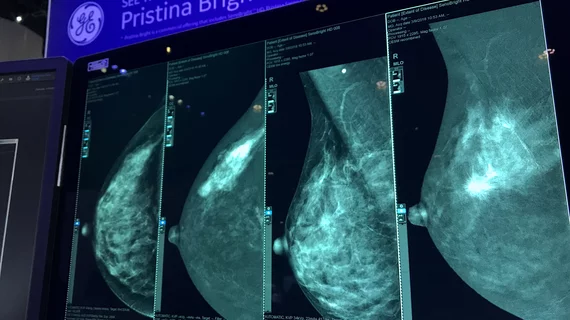
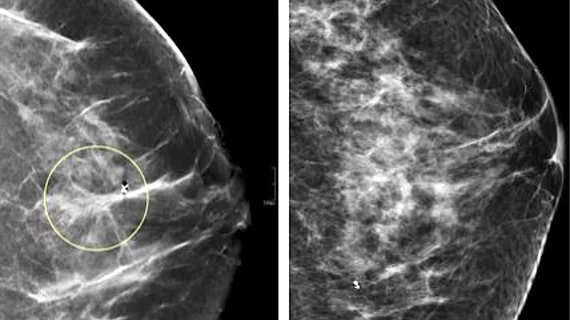
Comparison of a 2D digital mammogram and breast tomosynthesis 3D mammography showing ability to better evaluate details in areas of dense breast tissue, rather than seeing areas of dense breast tissue overlapping, which can mimic or hide a cancer. Photo from UCSF.

Comparison of a 2D digital mammogram and breast tomosynthesis 3D mammography showing ability to better evaluate details in areas of dense breast tissue, rather than seeing areas of dense breast tissue overlapping, which can mimic or hide a cancer. Photo from UCSF.

Experts in the field say the rising numbers of 3D mammography systems show it is becoming the new standard of care.

ACR CEO outlines top trends in breast imaging

An example of contrast enhanced mammography at RSNA 2022. It shows the original mammograms to the left, and the contrast enhanced breast imaging on the right. The contrast helps enhance areas of high vascular activity, which is typical in cancer growths. Photo by Dave Fornell

An example of contrast enhanced mammography at RSNA 2022. It shows the original mammograms to the left, and the contrast enhanced breast imaging on the right. The contrast helps enhance areas of high vascular activity, which is typical in cancer growths. Photo by Dave Fornell

Dana Smetherman, MD, is a diagnostic radiologist who specializes in breast imaging. She spoke to Health Imaging about some key issues that have her attention in 2024 and beyond. 

1 day of training with AI makes novice sonographers as accurate as experts in gestational measurements

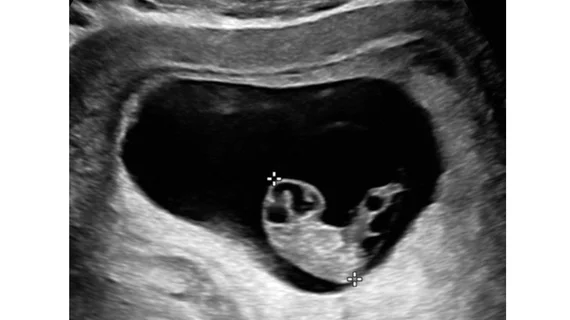
As the pregnancy advances, the embryo is easier to see, and accurate measurements can be obtained with transabdominal ultrasound. A crown-rump length (CRL) measurement. This ultrasound scan shows the CRL, which is the average of discrete fetal measurements from the tip of the head end to the tip of the rump end in the midsagittal plane of the embryo. This is highly accurate for pregnancy dating. Images courtesy of RSNA

As the pregnancy advances, the embryo is easier to see, and accurate measurements can be obtained with transabdominal ultrasound. A crown-rump length (CRL) measurement. This ultrasound scan shows the CRL, which is the average of discrete fetal measurements from the tip of the head end to the tip of the rump end in the midsagittal plane of the embryo. This is highly accurate for pregnancy dating. Images courtesy of RSNA
This sort of tool could be a game changer for prenatal care in low resource settings, authors of a new paper published in JAMA suggest.