Case Studies

Displaying 13 - 24 of 65
illustration_of_facial_recognition

What if artificial intelligence (AI) could support doctors in making decisions faster?

A vision starts with a need, quickly followed by a question—how can we accomplish it? At Hospital for Special Surgery (HSS) in New York, the vision to initiate digital pathology coupled with fully integrating radiology and digital pathology images in one enterprise imaging (EI) system started seven years ago. They went live in February—the first U.S. installation of Sectra’s Digital Pathology Solution at the No. 1 orthopedic hospital in the country, 10 years running.

New Technology Add-On Payments (NTAP) are a class of reimbursement that are meant to help pay for new technology that is not included in the DRG bundled payment. Specifically, NTAP recognizes that current DRG payment rates can be a barrier to adopting new technology and represents an additional payment for hospital stays that use new technology determined by CMS to provide substantial clinical improvement and where the current DRG payment would be inadequate.

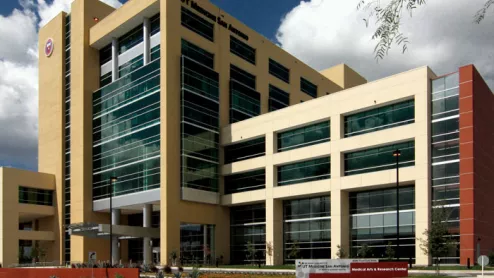
Outside shot of hopsital

Last year the institutional leadership at Texas’s University Health System, which contracts with the UT Health San Antonio physician network, made the decision to move all inpatient imaging off the radiology department’s PACS and onto a new enterprise imaging (EI) platform. Their goal was internal consolidation. 

Hospital for Special Surgery

Hospital for Special Surgery in New York City has pioneered a lot of innovation. This time it’s digital pathology. They’re all in with research and consultation and dawning with primary diagnostics, thanks to a jump-start from COVID-19, and a recent FDA clearance of Sectra Digital Pathology Solution for image viewing. 

Thumbnail

When it comes to digital medicine, digital pathology is very late to the game. But its time is coming. And the benefits could be many: Bolstering the capabilities, efficiency and reach of individual pathologists, cutting patient wait times, streamlining multidisciplinary team meetings (MDTs) and offering more data-rich decision-making. It could even obviate a shortage of pathologists. Where does it fit into your strategic plan?

Thumbnail

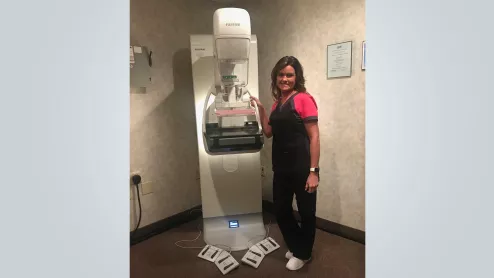
Fourteen years ago, radiologist Dean R. Ball, DO, founded a breast imaging practice to meet the needs of the underserved communities in and surrounding Youngstown, Ohio. Today, the practice Ball founded, Tiffany Breast Care Center, employs 16 mammography staffers, up from five in 2004. Although the practice has grown significantly, Ball is committed to reading the X-ray images for each of his patients—which is upwards of 15,000 annually.


Thumbnail

Hackensack Meridian Health Hackensack University Medical Center is the largest provider of inpatient and outpatient services in all of New Jersey. In fact, the 781-bed teaching and research hospital—which first opened its doors in Hackensack back in 1888—was ranked No. 1 in U.S. News & World Report’s 2017-2018 Best Hospital rankings for the entire state.

Thumbnail

As electronic health records (EHRs), interoperability and value-based care have grown more important in healthcare, an increasing number of providers are tasking IT departments with developing, implementing and managing complex enterprise imaging (EI) strategies. And one of the biggest components of any EI strategy is its ability to properly store the massive amounts of data the provider produces on a daily basis.

Hartford HealthCare is Connecticut’s most comprehensive healthcare network. Over the last several years, this community and academic health system has grown significantly through its strategic affiliations with hospitals and a variety of providers. 

Thumbnail

At RSNA 2017 in Chicago, FUJIFILM Medical Systems U.S.A., Inc., is unveiling its brand new suite of solutions for pediatric patients. Each solution was designed specifically to combat the challenges associated with treating children while focusing on efficiency, low radiation dose and convenience.

Thumbnail

The Radiology Department at Driscoll Children’s Hospital in Corpus Christi, Texas, didn’t need a nudge from Washington, D.C., to upgrade to digital radiography (DR). With one exception, the department’s x-ray rooms were fully DR-capable as of last year; Centers for Medicare and Medicaid Services (CMS) said it would start reducing payments for analog X-ray in 2017 and for computed radiography (CR) in 2018.