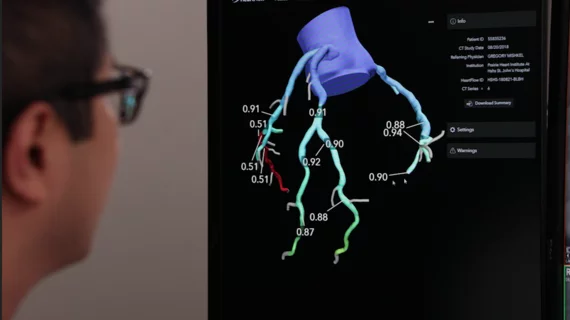
HeartFlow’s non-invasive cardiac computed tomography derived fractional flow reserve (FFR-CT) technology enables FFR values for the entire coronary tree of a patient using just a CT scan. This can show the significance of any coronary plaque lesions and if a patient needs to be sent to the cath lab for revascularization, or if they can be treated medically.
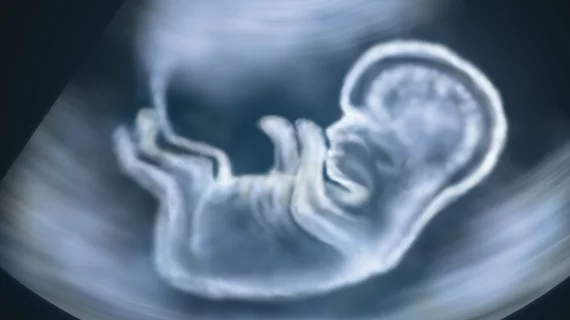
Experts have developed an artificial intelligence model that can estimate gestational age with accuracy that rivals that of formally trained sonographers completing fetal biometry scans.
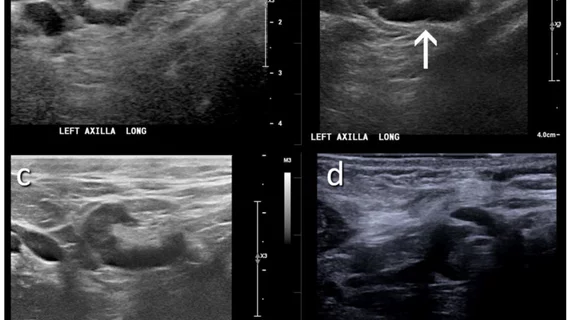
A 46-year-old patient with a strong family history of breast cancer had a screening ultrasound prior to COVID-19 vaccination demonstrating a morphologically normal left axillary lymph node. (B) 25 days following the second dose of the COVID-19 vaccination, the patient presented with a palpable lump in the left axilla and ultrasound demonstrated enlarged lymph nodes with cortex measuring up to 6 mm in thickness (arrow). (C) A follow-up ultrasound 21 weeks following demonstrated stable axillary lymphadenopathy. (D) An ultrasound-guided core biopsy was then recommended and pathology demonstrated lymphoid cells negative for carcinoma. Image courtesy of RSNA
New research shows that persistent lymph node swelling observed on imaging can persist beyond 12 weeks post-vaccination for up to 50% of women.
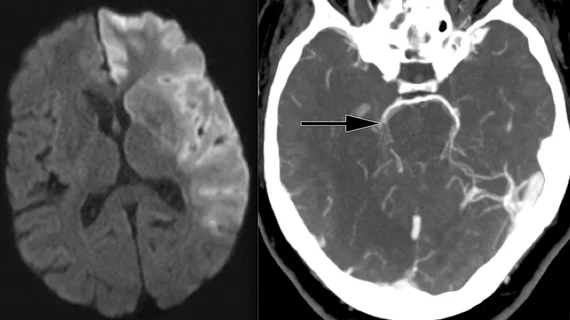
Despite increases of 250% for CTA and 428% for CTP, researchers observed lower rates of neuroimaging utilization among rural residents, older individuals (80 years and above), women and Black patients.
Experts involved in the study suggest their findings could eventually be used to detect pancreatic cancer in its earliest stages when patients are most likely to respond to interventions favorably.
The model combines clinical data with imaging from head CT scans in individuals with severe traumatic brain injuries to quickly predict 6-month outcomes.
Utilization of head CT perfusion (CTP) for imaging stroke patients spiked 428% between 2012 and 2019. Curiously, the uptrend was associated with higher mortality up to a year after discharge.