For 45% to 47% of patients who were deemed negative after conventional baseline scans, the use of the radiohybrid imaging agent resulted in at least one true positive PET finding
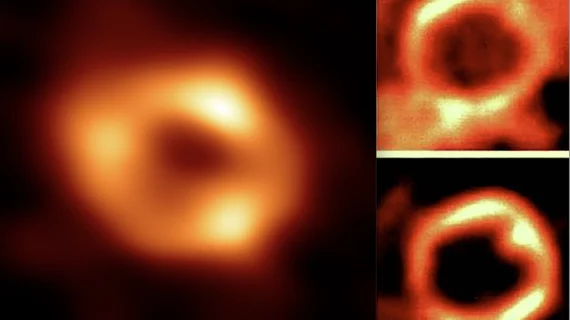
A comparison on the black hole at the center of the Milky Way galaxy (left) with PET cardiac myocardial perfusion nuclear imaging exams (right). The cardiac diagnosis of the galactic heart is motion artifact. Black hole image from the EHT Collaboration
The first image of the black hole at the heart of our Milky Way galaxy amazed the scientific community, but left cardiologists with questions about the true cardiac health of the galaxy.
Because sacral insufficiency fractures do not always show a fracture line, they can be difficult to diagnose or even misdiagnosed as bone metastasis, which could result in additional treatments like radio-chemotherapy.
Radiology practice leaders who begrudge requests for parental and medical leave—if any such leaders are still extant in 2022—received a bracing wakeup call in late April.
The study, which followed 195 patients recently diagnosed with multiple myeloma (MM), found that a negative PET/CT scan six months after diagnosis and induction therapy was significantly linked with improved survival.
Researchers have developed a prediction model that takes into account both imaging (post-NAC breast MRI) and clinical-pathologic features when forecasting patients' overall survival.
APP volume and share of image-guided paracentesis increased from 10.2% to 15.8%, and from 7.7% to 12.9% for thoracentesis, while Medicare reimbursement for both procedures has seen a reduction since 2012.
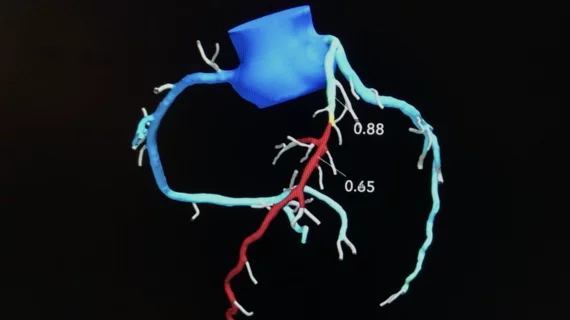
CT-FFR, which recently got a boost from the 2021 AHA/ACC chest pain guidelines, could play a key role for clinicians hoping to screen TAVR patients for coronary heart disease.