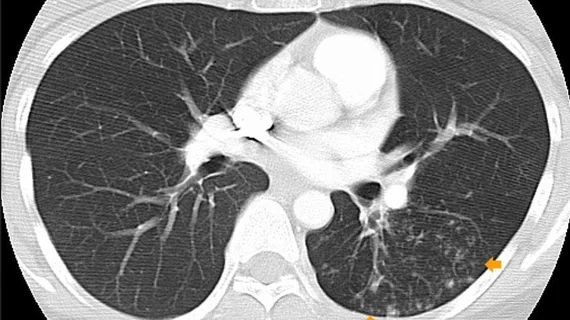
Experts involved in the study, which analyzed more than 3,000 CT scans, suggested that there could be a future role for the algorithm to assist radiologists in busy settings.
In an analysis of nearly 500 women, more than 17% of pregnancy terminations were due to major structural anomalies of the central nervous system, cardiovascular system, abdomen, skeleton or urogenital system of the fetus.
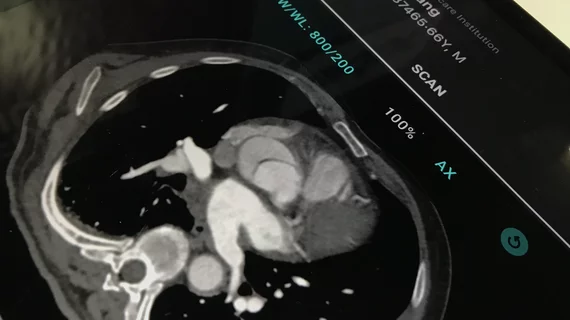
An example of the Aidoc alert via smartphone for an AI-detected, suspected aortic dissection. The AI alerts acute care team members automatically after the AI reviews the scans from the CT system before they are viewed by a radiologist to help speed response times.
The software will be used for the triage and notification of intracranial hemorrhage (ICH), pulmonary embolism (PE) and c-spine fractures identified on CT imaging.
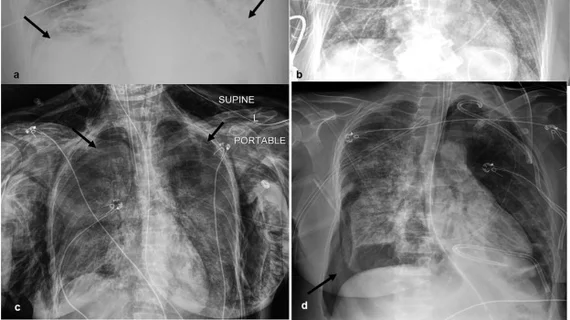
Radiologists involved in the care of these patients should be especially vigilant in identifying the signs of complications, experts cautioned in a new Clinical Imaging research paper.
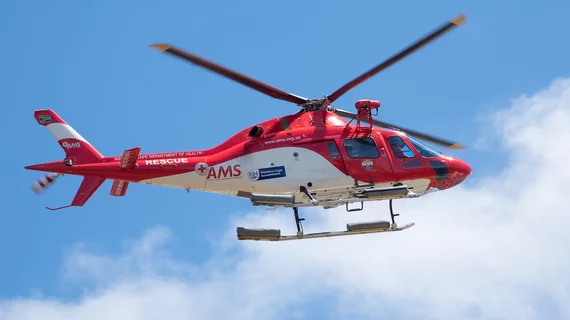
The Norwegian Air Ambulance Foundation is using a newly acquired five-bladed H145 helicopter to develop and test the technology and hopes to have a CT scanner implemented into it in the next four to five years.
Out of three trained and tested models that incorporated varying features, the model that combined clinical and radiomics features to predict malignancy exceeded the others in accuracy, precision and sensitivity.
At least one white matter tract with reduced volume—most often in midline white matter structures including the corpus callosum—was observed in 28% of TBI patients.