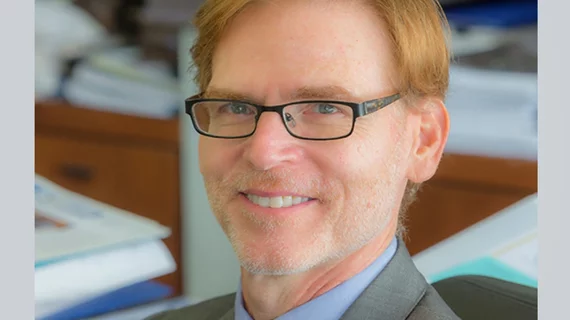
Bruce J. Tromberg, PhD. Courtesy of the National Institute of Biomedical Imaging and Bioengineering (NIBIB).
Bruce J. Tromberg, PhD, was appointed director of the National Institute of Biomedical Imaging and Bioengineering (NIBIB) on Jan. 7 at the National Institutes of Health in Bethesda, Maryland, according to a recent NIBIB news release.
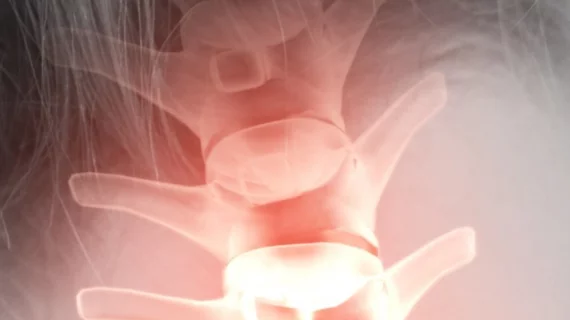
MRI of the spinal cord may be an effective way to inform early treatment of spinal muscular atrophy (SMA) and monitor the disease, according to a case report published in the January-February issue of Clinical Imaging.
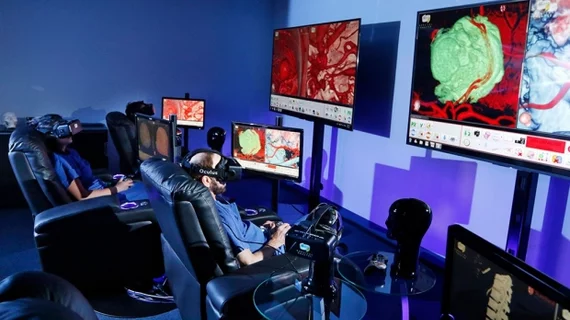
Courtesy of Stanford University School of Medicine.
At Stanford University Medical School in California, virtual reality is helping to make surgical training and planning more efficient and patient-centered all while reframing education for medical students, according to an article published online Jan. 9 by Fortune.
Notably lower T1 relaxation times, or how brain signals can weaken over time, may point to the presence of gadolinium in the brains of patients who’ve had more than one contrast-enhanced MRI exam, according to research published online Jan. 1 in Radiology.
Overall cancer deaths in the United States have steadily declined by 27 percent over the past quarter century, according to a new review from the American Cancer Society (ACS).
The findings suggest the evaluation of molecular biomarkers for Alzheimer’s disease should be adjusted for race, as African American patients were found to have lower levels of tau—a key biomarker used to identify the disease, according to research published online Jan. 7 in JAMA Neurology.
A team of Dutch researchers has developed a real-time hybrid fluoroscopic and nuclear imaging detector that may aid interventional radiology (IR) procedures such as radioembolization, according to authors of a Jan. 8 study published in Radiology.
Carestream has been awarded a multimillion-dollar healthcare IT contract for Veterans Affairs hospitals in the Pacific Northwest region, which includes Washington, Oregon, Idaho, Alaska and parts of Montana.
It may be time for diagnostic radiologists to begin thinking differently. That is according to a viewpoint article published Jan. 7 in the Journal of the American Medical Association, which argued the specialty must act as gatekeepers to combat wasted imaging.
With a recently awarded $3.2 million R01 grant from the National Institute of Neurological Disorders and Stroke (NINDS), researchers at the University of Cincinnati (UC) in Ohio plan to study how neuroimaging can help pinpoint risk factors of stroke recurrence, according to a recent university press release.