Machine learning approach requires less data to identify follow-up guidance in radiology reports

Artificial intelligence (AI) has been one of the biggest stories in healthcare for years, but many clinicians still remain unsure about how, exactly, they should be using AI to help their patients. A new analysis in European Heart Journal explored that exact issue, providing cardiology professionals with a step-by-step breakdown of how to get the most out of this potentially game-changing technology.

Follow-up recommendations in radiology reports commonly contain little standardization. Machine learning and deep learning methods are each effective for deciphering reports and may provide the foundation for real-time recommendation extraction, according to a recent study in the Journal of the American College of Radiology.

Smartphone app reduces incorrectly ordered imaging exams, boosts interprofessional education

Researchers from Vanderbilt University Medical Center in Nashville, Tennessee have found that a smartphone app may serve as an effective and valuable workplace-based education tool to help decrease the amount of incorrectly ordered scans, according to research published Jan. 2 in the Journal of the American College of Radiology.

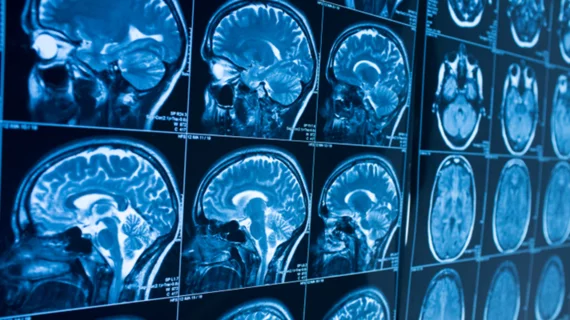
MRIs of autistic children reveal new insights into neural connectivity 

The team, led by Terisa P. Gabrielsen, PhD, assistant professor at Brigham Young University in Provo, Utah, successfully conducted structural and functional MRI scans of 37 children and adolescents between the ages of 7 and 17 years with autism—including 17 with less-developed language skills, according to research published online Jan. 2 in the journal Molecular Autism.

Optical imaging system visualizes molecular features of breast cancer tissue in real-time

189178_web.jpg

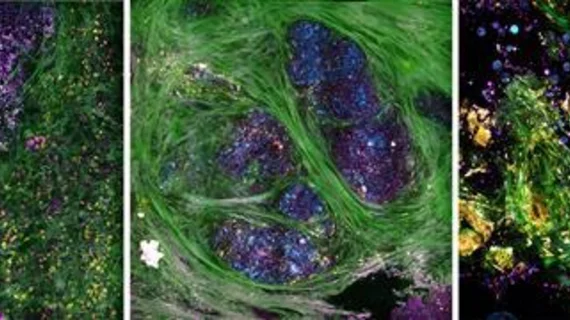
Label-free intraoperative nonlinear imaging of the tumor microenvironment provides real-time visualization of structural and molecular features, including extracellular vesicles that can be potential biomarkers of cancer aggressiveness. Courtesy of Stephen Boppart, PhD, et al. 

A team of researchers from the University of Illinois at Urbana-Champaign has developed a portable optical imaging system that can visualize molecular features of breast tissue after it's been surgically removed from a patient, according to research published Dec. 19 in Science Advances.