On July 6, the U.S. and China began what many are calling a trade war by implementing billions of dollars in tariffs on each other's imported goods, including medical imaging equipment and artificial intelligence (AI).
Not offering breast cancer screening to low-risk women and implementing risk-stratified breast screening programs may improve the cost-effectiveness of screening programs and reduce overdiagnosis, according to research published July 5 in JAMA Oncology.
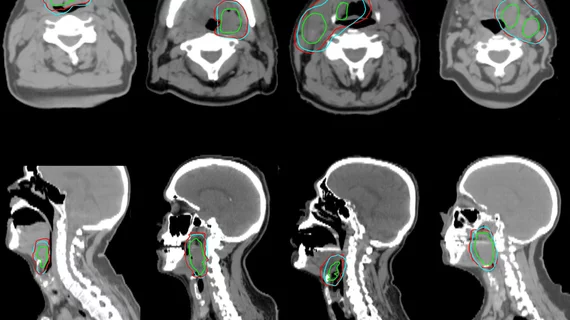
CT scan showing head and neck cancer. Courtesy of the International Journal of Radiation Oncology Biology Physics
A deep learning algorithm deployed at MD Anderson Cancer Center in Houston successfully automated and standardized clinical target volumes (CTVs) for radiation therapy in head and neck cancer patients.
Jointly funded by the federal and Western Australia (WA) governments, a $21 million state-of-the-art MRI suite for patients seeking neurosurgery recently opened in Perth, Australia, according to a July 6 article in The Australian.
The American College of Radiology Data Science Institute (ACR DSI) released its first use cases from the TOUCH-AI library for industry comment in order to gain feedback before it releases the entire library this fall, according to an ACR release.
As medical imaging progresses amid technological advancements and developing research, incremental innovation may add substantial value and growth to radiology practices.
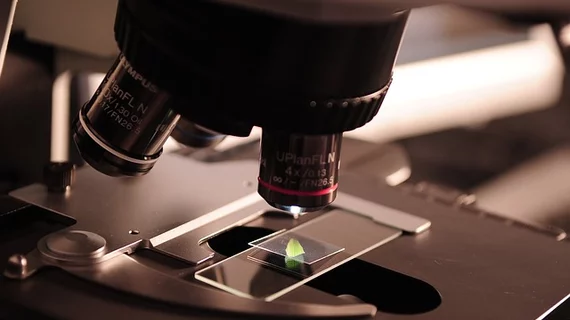
A team from Finland has developed an artificial intelligence (AI) pathology model that detected the T-cell count in cancerous tissue with 90 percent accuracy.
Researchers from Mount Sinai in New York have pinpointed a new biomarker that may ultimately provide individualized treatment in patients with an aggressive form of bladder cancer.
More than half of patients without a breast cancer diagnosis who were self-referred for a second opinion of imaging results received a change in radiologic interpretation, according to research published online June 28 in the Journal of the American College of Radiology.
A team of researchers has created a virtual reality (VR) environment that allows users to manipulate 3D molecular proteins 10 times faster than with a 2D screen, according to a July 3 article by the New York Times.