• Imaging
      |Imaging
    • Cardiac
    • Clinical Research
    • COVID
    • Interventional
    • Molecular
    • Neuro
    • Nuclear
    • Oncology
    • Orthopedic
    • Radiation Oncology
    • Screening
    • Women's
  • Technology
      |Technology
    • Artificial Intelligence
    • Contrast
    • CT
    • Enterprise Imaging
    • Imaging Informatics
    • Informatics
    • MRI
    • PACS
    • PET/CT
    • Ultrasound
    • X-Ray
  • Management
      |Management
    • Education & Training
    • Leadership
    • Patient Care
    • Policy & Regulations
    • Practice Management
    • Professional Associations
    • Quality
    • Staffing
  • Videos
  • Conferences
      |Conferences
    • ACC
    • AHRA
    • ACR
    • ARRS
    • ASRT
    • RBMA
    • RSNA
    • SBI
    • SCCT
    • SIIM
    • SIR
    • SNMMI
  • Custom Content
      |Custom Content
    • Experience Stories
    • Webinars & Videos
  • Subscribe

Search form

Home

Expanding CTA to more stroke patients improves outcomes

Adopting a “CTA-for-All” policy helped radiologists detect large vessel occlusion (LVO) and improved outcomes for patients with acute ischemic stroke, according to a recent study published in Stroke.  

  • Read more about Expanding CTA to more stroke patients improves outcomes

Google axed release of vast x-ray dataset following NIH privacy concerns

The Silicon Valley giant was set to publish a dataset containing 100,000 chest x-rays, until it received an urgent call from the National Institutes of Health.

  • Read more about Google axed release of vast x-ray dataset following NIH privacy concerns

Penn researchers want to know how opioids affect brain development via neuroimaging

Opioids

Source

US Department of Agriculture

A pair of Penn researchers will scan 100 awake 3-5 year old children, comparing the quality of traditional MRI methods to those taken using a motion-correction technology to better understand the connection between opioids and brain development.

  • Read more about Penn researchers want to know how opioids affect brain development via neuroimaging

Gadolinium-enhanced MRI helps diagnose painful shoulder condition

Polymyalgia rheumatica is a musculoskeletal disorder that causes aching and stiffness in the upper arms, neck, lower back and thighs and can be difficult for clinicians to confidently pinpoint since its symptoms occur in many other rheumatic diseases.

  • Read more about Gadolinium-enhanced MRI helps diagnose painful shoulder condition

Researchers optimize PSMA-targeted prostate cancer therapy to reduce negative side effects

The team found they could maintain the positive impact of therapy, while also minimizing its adverse effects.

  • Read more about Researchers optimize PSMA-targeted prostate cancer therapy to reduce negative side effects

3D neural network can help radiologists ID scarring associated with deadly heart condition

The boost in efficiency for measuring such scarring could make it easier for clinicians to overcome the time-consuming process of quantifying late gadolinium enhancement (LGE)—a proven predictor of hypertrophic cardiomyopathy.

  • Read more about 3D neural network can help radiologists ID scarring associated with deadly heart condition

Some patients wait more than 120 days for a brain scan in Ireland

Irish flag Ireland

Patients who are enrolled in Ireland’s public health system are waiting, on average, 120 days more for a brain MRI compared to those who can afford private coverage, the Irish Times reports.

  • Read more about Some patients wait more than 120 days for a brain scan in Ireland

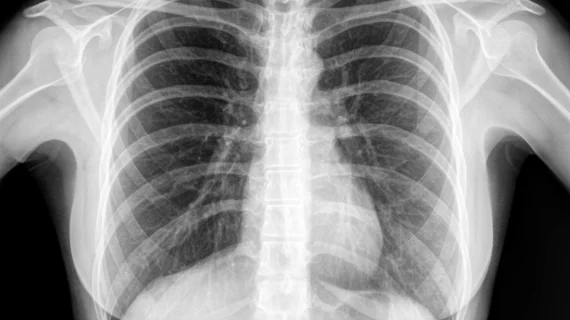
AI helps radiologists spot lung cancer on chest x-rays

Lungs

In fact, clinicians who took a second look at x-rays using the deep learning software improved their sensitivity, on average, by 5.2%.

  • Read more about AI helps radiologists spot lung cancer on chest x-rays

Neural network improves imaging technique for an advanced look at cancer cells

cells

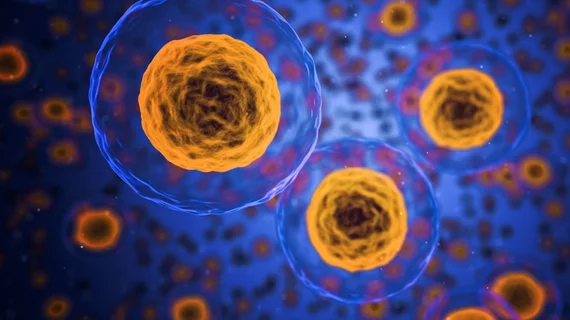
The novel method uses a deep neural network to improve fluorescence lifetime imaging, which allowed scientists at Rensselaer Polytechnic Institute to view molecular-level interactions within cells.

  • Read more about Neural network improves imaging technique for an advanced look at cancer cells

Researchers use color x-ray scanner, ‘GPS particles’ to pinpoint microfractures

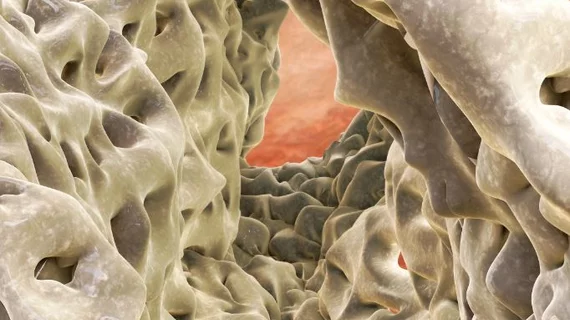
Besides pinpointing microfractures, the researchers believe combining color spectral CT imaging with their novel nanoparticles could help detect more serious problems such as heart blockages.


  • Read more about Researchers use color x-ray scanner, ‘GPS particles’ to pinpoint microfractures

Pagination

    • First page « First
    • Previous page ‹ Previous
    • Page …414
    • Page 415
    • Page 416
    • Page 417
    • Current page 418
    • Page 419
    • Page 420
    • Page 421
    • Page 422 …
    • Next page Next ›
    • Last page Last »
Subscribe
  • Home
  • News
  • Article Archive
  • Custom Content
  • Webinars
  • Press Releases
  • Content Studio
  • Advertising
  • Submit Press Release
  • Contact Us
  • Terms of Use
  • Privacy Policy
  • Cardiovascular Business
  • HealthExec
  • Radiology Business
 
© 2026 Innovate Healthcare | All Rights Reserved. | Terms of Use | Privacy Policy
 
Design by Adaptive Theme