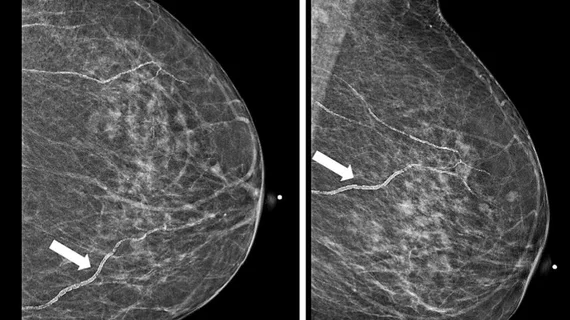
Arrows illustrate breast arterial calcifications for a 65-year-old woman on a screening mammography image (mediolateral oblique and craniocaudal views). Images and caption courtesy of Clinical Imaging.
Specifically, women with BACs on their mammogram may be at an increased risk of atherosclerotic cardiovascular disease.
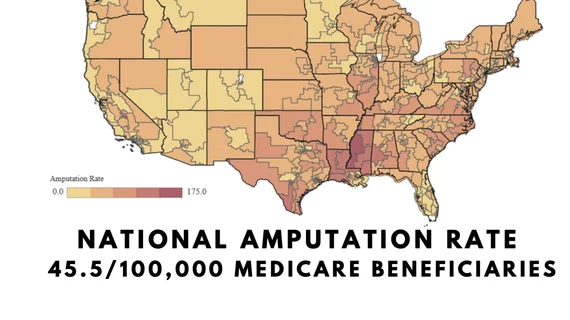
Map of Congressional districts and the rate of amputations based on Medicare data. The primarily Black, rural and low-income area of the Mississippi delta region is shown in red with the highest number of amputation procedures in the country.
September is peripheral artery disease (PAD) awareness month, and medical societies are using it to promote awareness for patients and referring physicians to act against the debilitating disease.
Harrison.rad.1 can conduct chats related to imaging, identify and localize X-ray findings, generate reports and provide its reasoning based on patient history and clinical context.
"A significant part of burnout stems from the overwhelming administrative burden," explains Elizabeth Ann Ignacio, MD, FSIR, FACR, chair of the SIR Small and Rural Practices Committee.
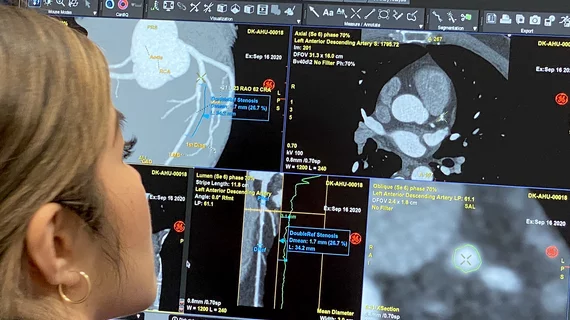
GE Healthcare's CardIQ Suite offers AI to help automated cardiac CT assessments, including the measurement of vessels and anatomy, visualization of chamber mobility, plaque imaging and calcium scoring. Photo by Dave Fornell.
Imaging experts have said the move could reshape the financial landscape for hospitals offering Cardiac CT services.

![The American Society of Echocardiography (ASE) has shared new recommendations for performing medical imaging exams on heart failure patients with surgically implanted left ventricular assist devices (LVADs) and temporary mechanical circulatory support (TMCS) devices. The guideline, published in full in the Journal of the American Society of Echocardiography, represents ASE’s first update on the topic since 2015.[1]](/sites/default/files/styles/top_stories/public/2024-09/screenshot_2024-09-10_at_2.06.47_pm_0.png.webp?h=b1c27bf2&itok=JY7Oyzce)