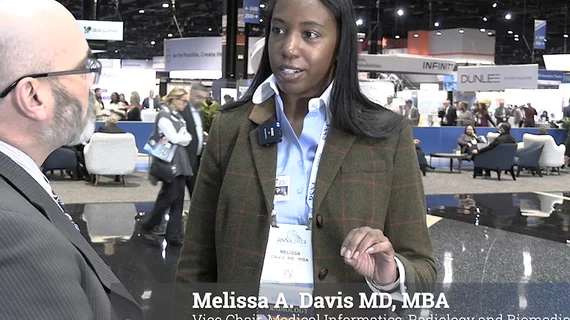
Melissa Davis, MD, vice chair of medical informatics and associate professor at Yale University’s Department of Radiology and Biomedical Imaging, shares her findings from research on private equity market penetration.
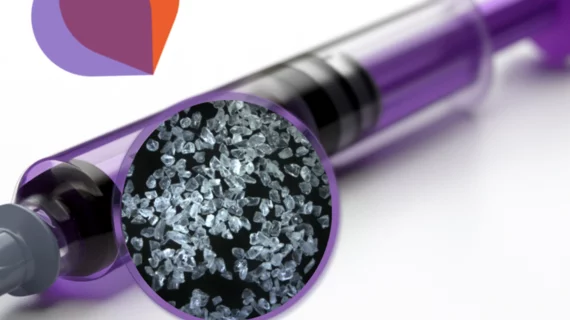
The bioresorbable agent is made from small irregularly shaped, dry gelatin particles designed for the embolization of hypervascular tumors and blood vessels.
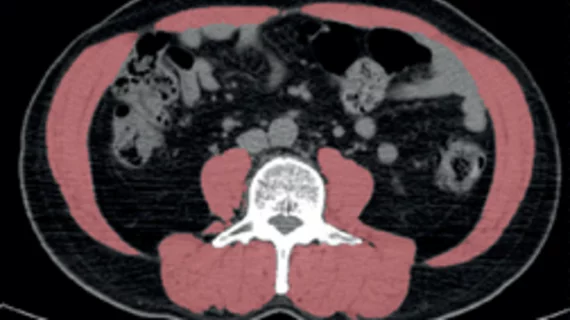
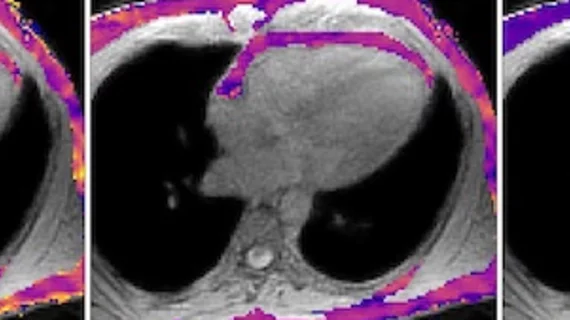
Axial noncontrast CT image of a 69-year-old male patient with a BMI of 28.4 showing normal skeletal muscle mass and radiodensity, as indicated by a skeletal muscle index of 62.4 cm2/m2 and a skeletal muscle radiodensity of 41.6 HU. Photo courtesy of RSNA.
New research findings could help explain the “obesity paradox,” wherein being overweight is linked to both improved outcomes in certain diseases and increased mortality rates in others.
Radiologist Jessica Porembka, MD, FSBI, an associate professor with the breast imaging division at University of Texas Southwestern Medical Center, explains what it means when a mammography report says a patient has architectural distortion.
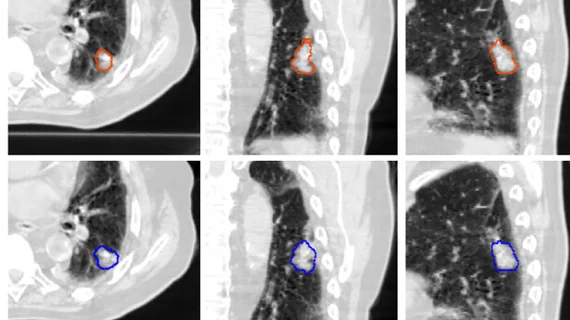
In a new clinical study, the model was able to maintain its performance on scans completed on different types of CT equipment across multiple medical centers.