When CMS released the 2020 Medicare Physician Fee Schedule (MPFS) proposed rule, it included revisions that could lead to technical component payment reductions of up to 80% for certain services related to myocardial PET scans.
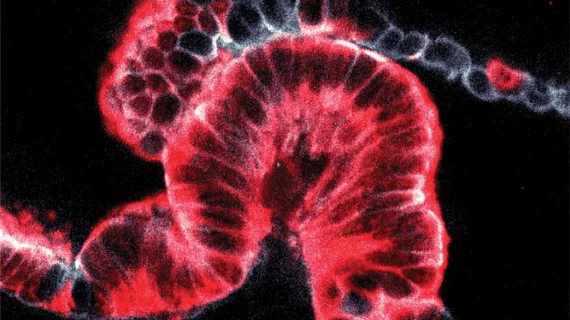
The image shows endophytic cancer growing inside the pancreatic duct of a mouse. Courtesy of Hendrik Massal, Francis Crick Institute.
The American Society for Radiation Oncology (ASTRO) has updated its recommendations for using radiation therapy to treat patients with diagnosed pancreatic cancer.
Using contrast-enhanced digital mammography (CEDM) to evaluate low to moderately suspicious breast lesions can greatly reduce biopsies in patients with benign lesions, according to a study published Sept. 5 in Academic Radiology.
The ACR released a statement urging more nuanced conclusions should be drawn from a Sept. 3 study published by JAMA that found the use of medical imaging continues to grow despite efforts to curb overutilization.
A model utilizing natural language processing and machine learning can accurately detect radiology reports that demand follow-up imaging, reported researchers of a new study published in the Journal of Digital Imaging.
Patients with a family or personal history of allergic reactions to contrast media are in danger of experiencing future reactions, according to a study published Sept. 3 in Radiology.
Why do some dogs hunt while others herd? The connection between brain structure and function is well-known in both humans and canines, but new research published in the Journal Neuroscience offers new insight into the relationship between innate brain wiring and learned behavior.
Using [68Ga]Ga-PSMA-11 PET/CT to monitor treatment response in prostate cancer patients can offer important lesion-based insights over prostate-specific membrane antigen (PSMA)-based monitoring, according to a new study published in EJNMMI Research.
“Like all aspects of medicine, it's important to make sure imaging is justified, and that the potential benefits are balanced against the potential harms," said lead author Rebecca Smith-Bindman, MD.
Researchers from the University of Oxford have created a new biomarker based off of coronary CT angiography (CCTA) images that can select patients at a high risk of heart attack five years before they occur.