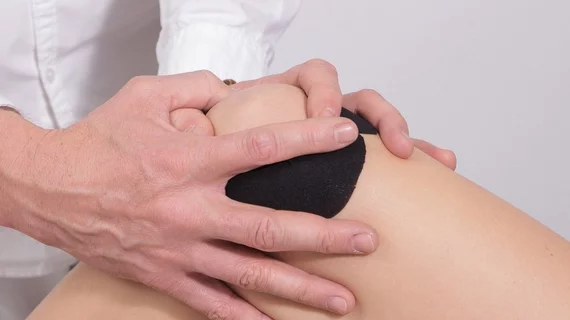
The Royal Australian College of General Practitioners (RACGP) has issued updated guidelines for knee and hip osteoarthritis management, with an aim to reduce unnecessary imaging, surgery and medication across the continent.
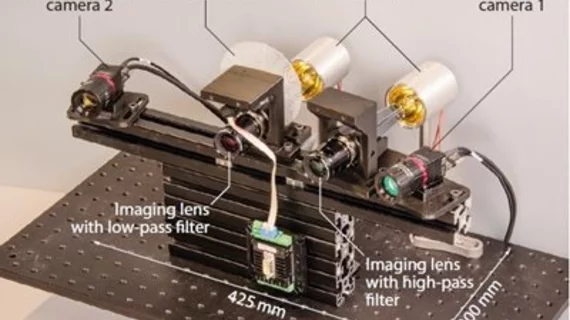
Medical imaging may reach a higher dimension with the development of a compact hyperspectral imaging system able to measure an object’s shape and light reflection properties through so-called "5D," high-speed imaging.
U.S. Rep. Mike Bost, R-Illinois, recently spoke with veterans and employees at Marion VA Medical Center in Illinois following a report detailing misread radiology scans at the hospital, NBC’s WPSD reported.
Researchers re-examined CT angiography’s value in a recent Journal of the American College of Radiology study, finding utilization rates are rising in the Medicare population, with radiologists apparently leading the charge.
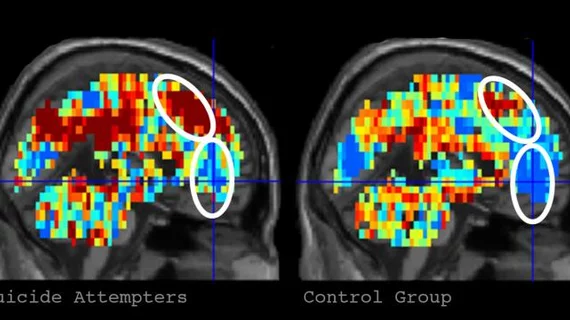
The National Institute for Mental Health (NIMH) has granted two Pittsburgh-based researchers a five-year, $3.8 million grant to better identify and treat individuals with suicidal thoughts using functional MRI (fMRI).
A woman is suing Northwestern Medicine Regional Medical Group in Chicago and several physicians for allegedly failing to properly diagnose her with terminal cancer from a CT scan of her liver, according to a report published Aug. 28 by the Cook Country Record.
Researchers at Purdue University in West Lafayette, Indiana, are creating a photoacoustic tomography probe that combines optical and ultrasound techniques to improve diagnosis of common and costly diseases.
Recent statistics from the National Health Service (NHS) show that almost a quarter of patients wait more than six weeks for key diagnostic tests such as MRI and CT scans, the BBC reported on Aug. 27.
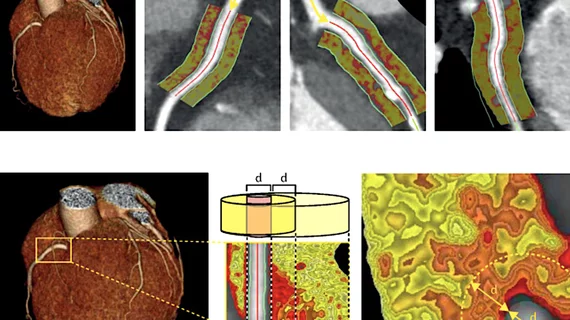
Perivascular fat attenuation index CT scans showing the amount coronary wall inflammation. This measure is being tested in trials to see if it can accurately predict which coronary artery lesions will progress to cause heart attacks.
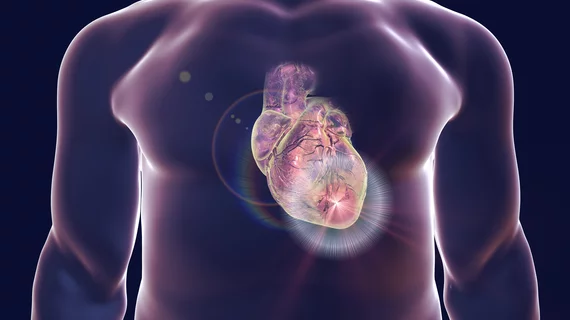
A team of international researchers has developed a new imaging biomarker able to non-invasively predict a patient’s risk of coronary inflammation and heart attack, according to research published Aug. 28 in The Lancet.
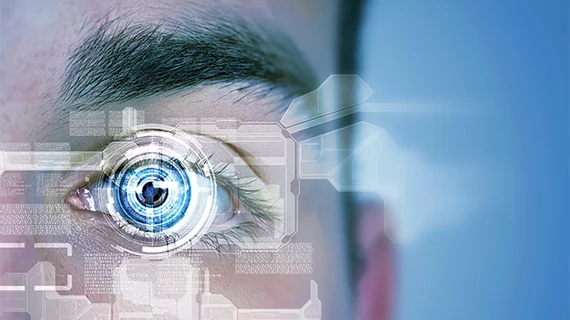
Research detailing the first FDA-approved artificial intelligence (AI) system to autonomously detect diabetic retinopathy was published Aug. 28 in Nature Digital Medicine.